Six Seconds of Fame: The Strange Economics of Buying Clothes That Don't Exist

Photo: Yourantiaman, CC BY-SA 4.0, via Wikimedia Commons
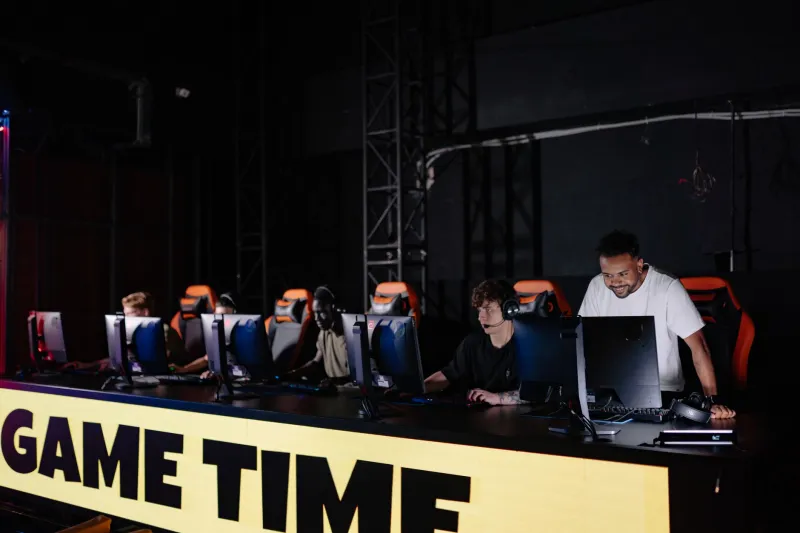
Let's start with a scenario that would've sounded unhinged a decade ago. You spend twenty dollars on an outfit. It doesn't arrive in a box. It doesn't exist in a closet. It exists on a polygonal avatar inside a game, where your friends — who are, let's be real, mostly staring at the minimap — might register your fit for a few seconds before the action pulls their eyes away. And you do it again next week.
Congratulations, you're participating in virtual fashion, the fastest-growing corner of the style economy. And I have complicated feelings about it.
The Designer Economy Nobody Saw Coming
Roblox quietly built one of the largest fashion marketplaces on Earth. Independent creators — some of them teenagers — design and sell UGC clothing items to an audience of hundreds of millions of monthly users. Top creators earn life-changing money. Luxury brands noticed: Gucci, Nike, and dozens of others now sell digital-only items, some of which have resold inside platforms for more than their physical counterparts cost IRL.
Here's the part that actually gets me: the economics aren't fake. Real money changes hands. Real designers make real careers. The only thing missing is the fabric.
The Case For: It's Self-Expression Without the Rent
Defenders of virtual fashion make a genuinely good argument. Physical fashion is gated by body type, budget, and geography. Digital fashion isn't. A kid in a small town can wear a one-of-one designer piece in a game and be judged purely on taste, not on their ZIP code or their size. In that sense, virtual drip is more democratic than anything on a runway.
There's also the sustainability angle — no factories, no shipping, no landfill. And let's not pretend the six-second problem is new. How long do people actually look at your outfit at a party? If we're being honest with ourselves, most IRL drip is also performed for fleeting glances. The difference is that virtual fashion prices accordingly.
The Case Against: A Flex With No Floor
But here's where I pump the brakes. Physical fashion, for all its flaws, anchors to something real. A jacket keeps you warm. A collection can be worn, resold, passed down. Virtual fashion's value is entirely social and entirely platform-dependent — and platforms can shut down, change their terms, or render your grail obsolete with a patch.
Worse, virtual fashion is flex culture with the brakes fully off. Streetwear hype at least has a scarcity ceiling: there's one pair of sneakers, one archive piece. Digital items can be minted infinitely, and the scarcity is manufactured by whoever profits from it. When the scarcity is artificial and the object is invisible, you're not buying clothes anymore. You're buying a slot machine that pays out in social validation.
My Verdict: Genius, With an Asterisk
I think virtual fashion is legitimately the future of self-expression — for a generation whose social lives already happen on screens. The Roblox designer economy is real creative labor finding real audiences, and that deserves respect.
But the asterisk matters. Spend like you'd spend on any cosmetic: for joy, not for status. The moment you're buying a digital fit to impress people who'll see it for six seconds, ask whether those six seconds are worth your rent money. The drip is real. Keeping the flex in check has to be too.