Suited Up to Frag Out: How Pro Gamers Are Using Fashion as a Pre-Match Weapon
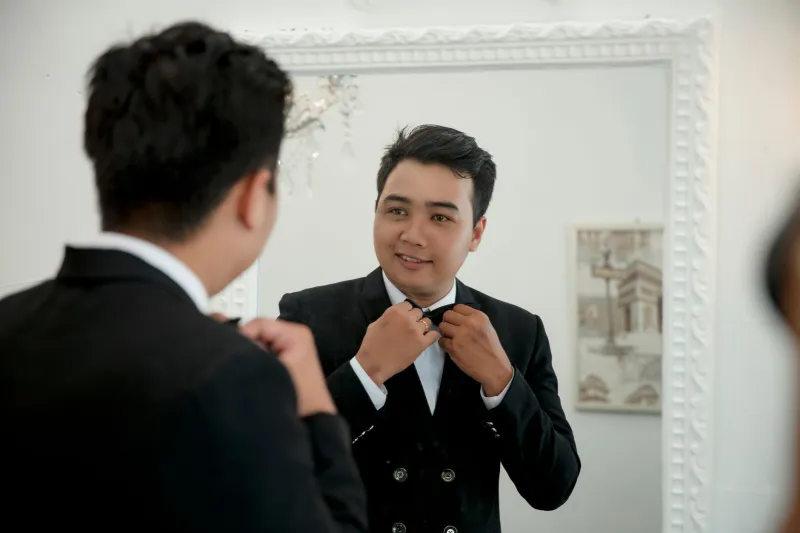
There's a moment that happens before every major tournament match that almost nobody talks about. It's not the warm-up scrims. It's not the VOD review session at 2 a.m. It's the part where a competitor stares into a hotel bathroom mirror, decides what they're putting on their body, and somehow — in ways that are harder to quantify than kill-death ratios — gets their head right.
Call it superstition. Call it routine. Call it pre-match drip psychology. Whatever the label, the ritual is real, and it's more deliberate than most fans realize.
More Than Just a Jersey
For years, the conversation around esports fashion stopped at the team jersey. Show up, represent the org, sit down, play. But that framing misses what's actually happening at the individual level, especially as esports has grown into a legitimate professional ecosystem with all the psychological pressure that comes with it.
Competitive players — particularly those who've been grinding the circuit long enough to develop real pre-match routines — will tell you that what they wear functions less like a uniform and more like a mental switch. Something they flip on purpose.
"I've got specific stuff I wear on match days," said one Valorant competitor who's been on the North American circuit for two years. "It's not random. I know what I'm putting on before I even look at my phone in the morning. That consistency is part of the whole headspace thing."
That kind of intentionality mirrors what sports psychologists have observed in traditional athletics for decades. Pre-performance rituals — including clothing choices — help athletes signal to themselves that it's time to compete. The outfit becomes a cue. A trigger for focus.
The Psychology Behind the Fit
Dr. Adam Galinsky, a researcher at Columbia Business School, coined the term "enclothed cognition" to describe how the clothes we wear affect our psychological state and performance. His work found that wearing a lab coat associated with intelligence actually improved test performance — not because of the fabric, but because of what the wearer believed the coat represented.
Apply that to esports and the logic tracks hard. If a player associates a specific hoodie, a particular colorway, or even a certain pair of sneakers with peak performance — whether through past wins or just personal conviction — wearing that item could legitimately prime their mental state before a match.
It's not magic. It's association. And competitive players, consciously or not, are running this play all the time.
Colors, Brands, and What They're Actually Communicating
Ask around the esports community about tournament day choices and patterns start to emerge. Darker fits tend to show up more often in high-stakes settings — black, navy, deep green. Whether that's intentional or just a byproduct of what looks good on camera is hard to say. But players who've thought about it will often mention that certain colors make them feel less visible, more locked in, less performative.
Brands matter too, though maybe not in the way you'd expect. It's less about logo flex and more about feel. Comfortable, well-fitted clothing that doesn't distract is a genuine competitive consideration. Anything that pulls focus — a scratchy collar, a fit that's too tight, something that reads as "dressed up" rather than "game-ready" — can create friction in a mental environment that needs to be frictionless.
One Counter-Strike player put it plainly: "I'm not trying to look good for the crowd. I'm trying to feel like I'm already in the zone before I sit down. Those are different goals."
The Superstition Angle
Not every tournament-day fit ritual comes from a place of psychological strategy. Some of it is straight-up superstition, and competitive players aren't shy about admitting that.
Winning in a specific outfit — especially during a breakout performance or a championship run — creates an association that's almost impossible to shake. Players have talked about rotating the same jacket back in for playoff runs, keeping a specific pair of shorts that were on during a clutch five-on-one, refusing to wash a beanie that was present for a tournament win.
It sounds irrational. But in an environment where mental edge is real and margins are tight, anything that makes a player feel more confident at the start of a match has measurable value. The superstition isn't the point. The confidence it generates is.
Building the Tournament-Day Wardrobe
So what does a deliberate pre-match wardrobe actually look like for a competitive player? Based on conversations across the scene, a few themes come up consistently.
Comfort is non-negotiable. Tournament days are long. Multiple matches, long waits between rounds, media obligations, travel. Anything that compromises physical comfort is out. Fitted joggers, quality hoodies, clean sneakers that don't need to be broken in — that's the general template.
Neutral or team-adjacent colors dominate. Most players aren't going loud on match day. The fit is meant to center them, not draw attention. When color does show up, it's often a subtle nod to team colorways rather than full-on branding.
Personal items carry weight. A chain that was a gift from a family member. Sneakers from a meaningful co-sign. A cap from a hometown crew. These details aren't random — they're grounding elements that connect a player to something beyond the match itself.
Repetition is the whole point. The best tournament-day fits aren't one-offs. They're rehearsed. Part of a sequence that the player's nervous system recognizes as the start of something serious.
Does It Actually Translate?
Here's the honest answer: there's no stat line for tournament-day drip. No one's tracking kills-per-outfit or round win rate by hoodie color. The connection between what a player wears and how they perform is real but indirect — mediated by confidence, focus, and mental state rather than any direct causal link.
But in esports, indirect edges are still edges. The mental game is enormous at the top level, where raw mechanical skill is increasingly table stakes and the difference between teams often comes down to composure, communication, and consistency under pressure.
If getting dressed a certain way helps a player arrive at their setup already locked in — already feeling like a competitor rather than someone hoping to compete — then the fit check before the frag isn't a vanity move. It's a preparation tool. Same category as warm-up routines, breathing exercises, and pre-match playlists.
The uniform was always part of the game. Turns out, so is everything else you put on before it.