Less Setup, More Views: The Rise of the Clean Stream Aesthetic
Photo: Tim Walker from United Kingdom, CC BY 2.0, via Wikimedia Commons
There's a version of the "dream streaming setup" that's been burned into gaming culture for years. Multiple monitors. RGB everything. A ring light that could illuminate a film set. Shelves stacked with figures, limited-edition boxes, and enough cable chaos to make an electrician nervous. It looked impressive. It looked expensive. And for a long time, it looked like what you needed to be taken seriously.
Then something quietly broke the formula.
The Streamer Who Logged On With Almost Nothing
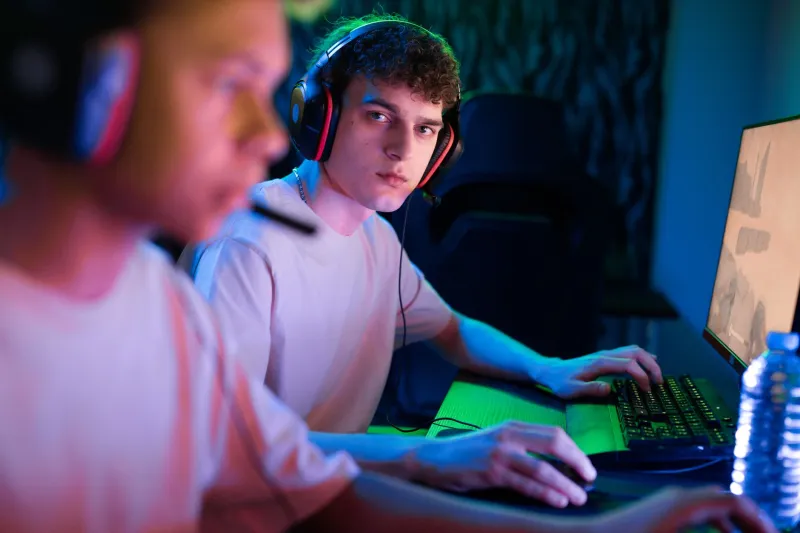
Scroll through Twitch or kick.com on any given evening and you'll notice something unexpected: some of the most engaging streams aren't the most elaborate. They're the ones where the background is a plain wall, the lighting is a single soft lamp, and the setup is a mid-range laptop or a single modest PC tower. No LED strips. No merch wall. Just a person, a game, and a camera that's probably not the most expensive one on the market.
This isn't an accident. It's a vibe — and it's resonating.
Streamers who've leaned into what the community has started calling the "broke streamer aesthetic" (a term that's more compliment than insult at this point) are seeing real engagement gains. The parasocial connection that drives streaming success is built on relatability, and nothing is more relatable than a setup that looks like something a viewer could actually afford.
"I used to feel embarrassed that my setup wasn't more impressive," admits Dani R., a variety streamer from Columbus, Ohio with around 8,000 followers on Twitch. "I had this plain white wall, a basic webcam, one monitor. I thought I needed to upgrade everything before I could grow. Then I just started streaming consistently and people kept commenting on how 'chill' my stream felt. That word kept coming up. Chill."
Her monthly averages have climbed steadily over the past year — not despite the minimal setup, she now believes, but partly because of it.
Why Gen Z Is Over the Maximalist Era
There's a generational shift happening in what "authenticity" looks like on camera. Millennials built their streaming identity partly around the aspirational — showing off gear, building elaborate setups, performing success. It worked because the audience was buying into a fantasy. But Gen Z, which now makes up a massive chunk of the streaming viewership, grew up watching influencer culture collapse under the weight of its own performativity. They've seen the "authentic" reveal videos. They know what's staged.
The result is an audience that's increasingly skeptical of polish. A stream that looks too produced starts to feel corporate. Too many branded panels, too perfect a background, too much obvious investment — it can actually create distance between streamer and viewer instead of closing it.
Clean, minimal setups communicate something different. They say: I'm here for the game, not the aesthetic. And paradoxically, that lack of aesthetic becomes its own aesthetic.
"There's a trust signal in a simple setup," says Tyler M., a content creator and part-time social media consultant based in Austin. "When someone's streaming from what looks like their actual bedroom with their actual stuff, Gen Z viewers read that as honest. The over-produced stuff reads as trying too hard."
Budget Constraints as Creative Direction
Here's the twist nobody planned for: a lot of this minimalist wave wasn't intentional. It started with streamers who genuinely couldn't afford the full setup and just went live anyway. And what they stumbled into was a visual language that felt fresh precisely because it wasn't engineered.
When you can't afford to fill the background, you learn to work with what you have. Good positioning relative to natural light. A clean corner of a room. A single decent microphone instead of a full broadcast rig. The constraints forced creativity, and the creativity produced something that audiences responded to.
This mirrors a pattern you see in other creative spaces. Lo-fi music gained mainstream traction partly because the production aesthetic — imperfect, warm, human — felt like a counterpoint to over-produced pop. Disposable camera photography made a comeback because digital perfection started to feel cold. Constraint, in creative work, often generates character.
For streaming, the character is realness. And realness, right now, is the algorithm's friend.
What the Numbers Actually Suggest
While streaming platform analytics aren't always public, the trend is visible in the meta. Clips from minimal-setup streams circulate on TikTok and Twitter with captions like "this energy is immaculate" and "why does this feel so cozy." The word cozy has become its own streaming genre — and cozy doesn't require a $4,000 rig.
Streamers who've documented their setup downgrades — yes, intentional downgrades — often report upticks in chat activity and follow rates shortly after. The shift in energy is palpable to viewers. Less visual noise means more focus on the person and the gameplay. That's where the actual connection happens.
It's also worth noting that Twitch and YouTube's recommendation algorithms reward watch time and engagement over production value. A stream that holds viewers because it feels genuine will outperform a visually impressive one that viewers click away from because it feels hollow.
The New Standard Is Deceptively Simple
What's emerging isn't really about being broke or being minimal for minimalism's sake. It's about intentionality. The streamers winning with this approach are the ones who've figured out that every element in frame should serve the viewer experience, not the streamer's ego. One good light. One clean background. One solid microphone. Everything else is noise.
For anyone building a setup in 2024, that's actually good news. The barrier to entry just got lower — not because quality doesn't matter, but because the definition of quality shifted. Authentic presence outranks expensive gear. Consistency outranks spectacle.
The best-looking stream might not be the most watched one anymore. And in a space where the whole point is connection, that feels exactly right.