Sitting Pretty Won't Save Your KD: The Truth About Ergonomics and Esports Performance
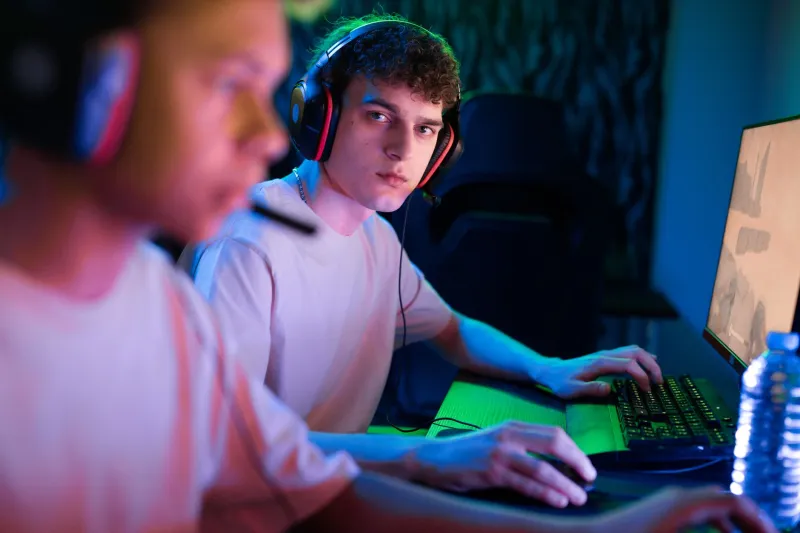
Walk into any Best Buy gaming section right now and you'll find a wall of chairs that look like they were designed for a spaceship that never left the ground. Racing stripes. Lumbar pillows the size of throw cushions. Price tags that creep north of five hundred bucks. The marketing copy practically promises you a pro contract if you just sit down correctly.
 Photo: Best Buy, via media.barchart.com
Except here's the thing nobody in the gaming chair industrial complex wants you to hear: the chair is probably the least important ergonomic variable in your entire setup.
That's not a hot take for the sake of it. It's what the data — and more importantly, the actual habits of top-level competitors — keeps pointing toward.
The Chair Flex Is Mostly a Flex
Gaming chairs exploded as a consumer category somewhere around 2015, riding the wave of esports viewership and the sudden cultural visibility of streamers who needed something photogenic behind them on camera. The look was borrowed straight from motorsport — bucket seats, bolsters, the whole aesthetic — and it worked beautifully as a marketing move.
But aesthetics and ergonomics aren't the same department.
Most premium gaming chairs are built around a seat position that encourages a slight recline, which might feel comfortable in short bursts but actively works against the forward-neutral posture that serious competitors default to during high-stakes play. When you're tracking a target or reading a minimap under pressure, your body naturally wants to hinge forward. A chair designed to cradle you in place fights that instinct.
Office chair manufacturers — the boring, unsexy ones — have spent decades engineering around actual human spinal mechanics. Companies like Herman Miller and Steelcase aren't sponsoring Twitch streams, but their products show up quietly in the home setups of more than a few pro players who'd rather not admit they're sitting on something that looks like it belongs in a cubicle.
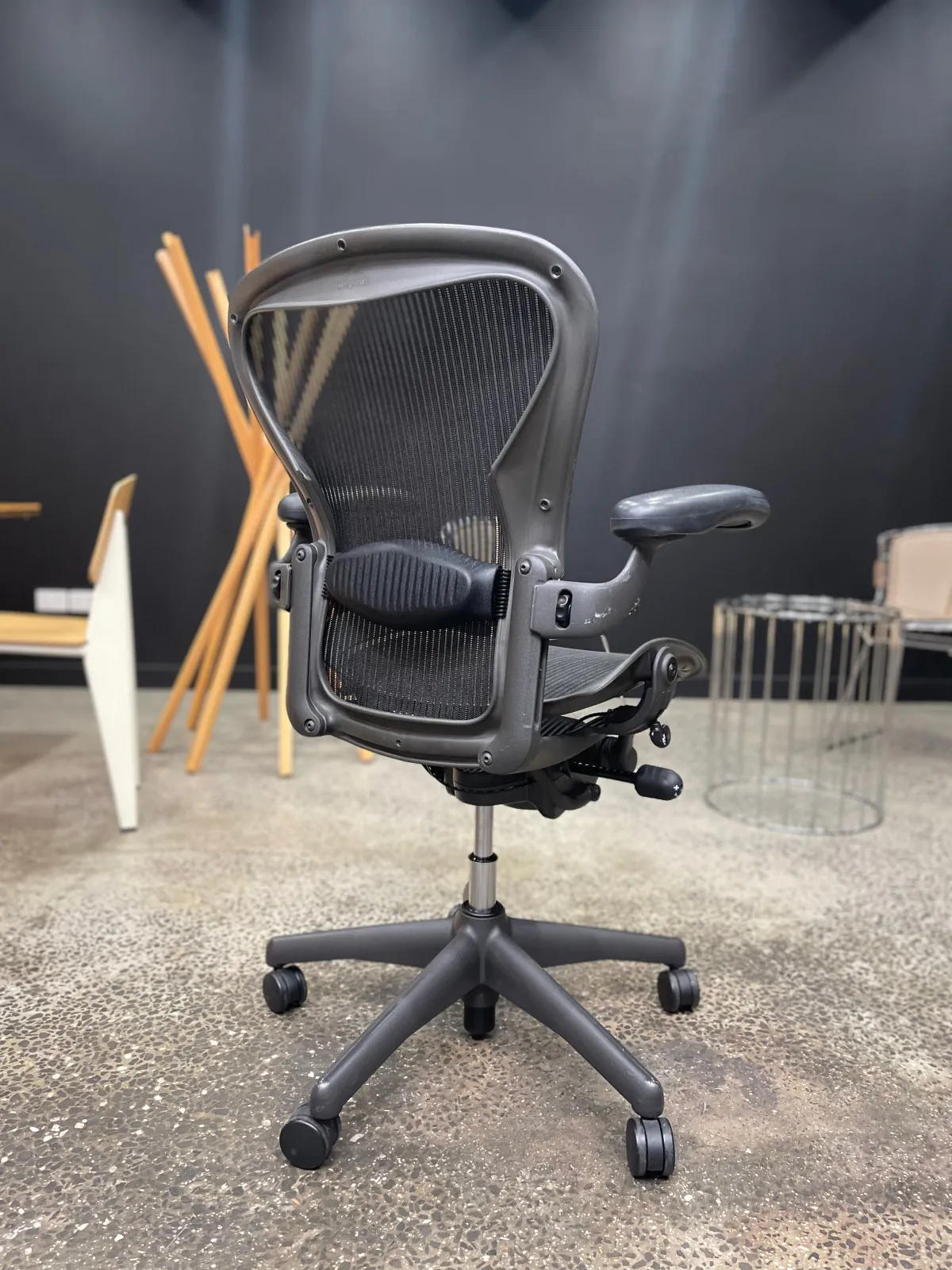 Photo: Herman Miller, via chairhub.com.au
What the Pros Are Actually Dialing In
Spend any time watching behind-the-scenes content from tournament organizers or team facility tours and a pattern emerges. The players who've been competing at the highest level for years aren't necessarily rocking the flashiest branded seats. What they are obsessive about is the relationship between their body and their peripherals.
Desk height is everything. If your elbows aren't sitting at roughly a 90-degree angle when your hands are on the keyboard, you're generating tension in your forearms and shoulders that compounds over a four-hour session. Most consumer gaming desks are built for a mythical average-height person and don't account for the actual range of human bodies. Sit-stand desks with fine-tuned height adjustment have quietly become one of the more common investments among players who take longevity seriously.
Monitor placement matters more than monitor specs. A 240Hz display positioned too high or too far away is doing less for your performance than a 144Hz panel sitting at eye level, roughly an arm's length from your face. Neck strain from looking up at a screen even slightly elevated is cumulative. Over weeks and months, it creates tension patterns that affect reaction time and focus in ways that are genuinely hard to trace back to the source.
Keyboard and mouse positioning is where most people quietly bleed performance. The standard advice is to keep your mouse arm in a neutral, relaxed position — not extended out at an awkward angle because your desk is too wide or your keyboard is sitting in the wrong place. Some players go as far as using a tenkeyless or 65% keyboard specifically to close the distance between their typing position and their mouse, reducing the lateral reach that builds up shoulder fatigue.
The Posture Habit Nobody Wants to Do
Here's the uncomfortable truth sitting underneath all of this: no piece of furniture, regardless of price point, corrects for bad habits. The players who manage long careers without the chronic wrist and back issues that end a lot of competitive runs aren't just buying better gear. They're building active awareness into their routines.
That means taking breaks that actually involve standing up and moving — not just tabbing out to check Twitter. It means occasional stretching that targets the specific muscle groups that tighten during extended mouse and keyboard use: hip flexors, thoracic spine, forearm flexors. Some teams now have physical therapists or performance coaches on staff specifically because the industry finally acknowledged that esports athletes have sports injuries.
None of that fits in a chair ad.
What You Should Actually Spend Your Money On
If you've got $500 burning a hole in your setup budget and you're genuinely trying to optimize for performance and longevity, here's a rough priority list based on what actually moves the needle:
- An adjustable desk — even a basic sit-stand converter can transform your setup's ergonomic profile.
- A monitor arm — lets you dial in screen height and distance with precision that a fixed stand never allows.
- A quality office chair with lumbar adjustment — doesn't have to be Herman Miller, but should have real adjustability, not just a racing aesthetic.
- A wrist rest and mouse pad combo sized to your actual arm movement — surprisingly overlooked.
- The chair itself — last, not first.
If you want a gaming chair because it looks good on stream or because you genuinely find it comfortable, that's a completely valid reason to buy one. Style is a real part of this culture and we're not here to shame anyone's setup choices. But don't buy one because you think it's going to edge out your opponents. That's not where the gains are hiding.
The Real Meta
The best setup you can build is one that lets you sit down for a long session and stand up afterward without your body filing a complaint. That's the actual competitive edge — not the chair with the most RGB options or the one your favorite streamer is contractually obligated to mention twice per broadcast.
The players who are still competing at 28 in a scene that chews through teenagers aren't doing it on vibes and lumbar pillows. They're doing it because they figured out early that the hardware between their ears degrades a lot faster when the hardware holding up their spine is working against them.
Adjust your desk. Move your monitor. Give your mouse arm some room to breathe. The chair can come last.