Peripheral Vision: How Your Controller, Mouse, and Headset Became the Real Statement Piece
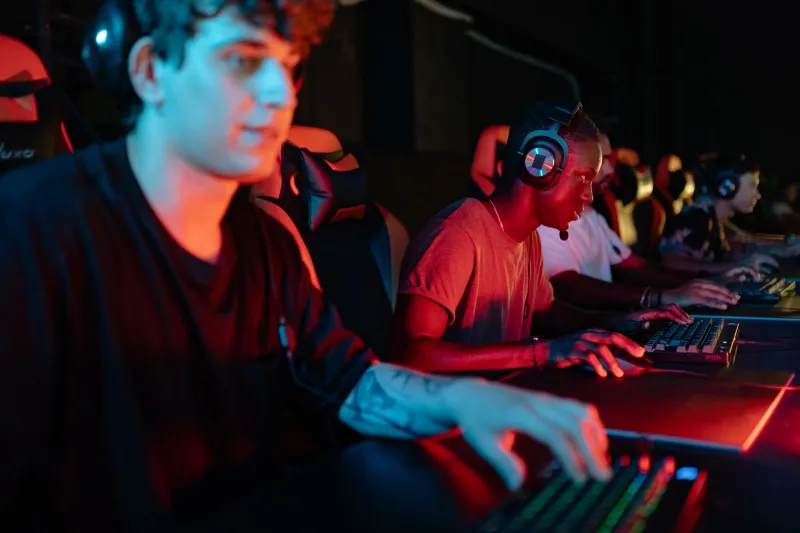
Walk into any major LAN event — your DreamHacks, your EVO Championships, your CDL Majors — and you'll notice something that wasn't true five years ago. Players aren't just showing up to compete. They're showing up coordinated. And we're not just talking jerseys and team hoodies. We're talking mice that match the colorway of their chair. Headsets that echo the exact shade of their mechanical keyboard. Controllers wrapped in custom skins that tie the whole look together like a well-placed accessory on a runway.
The peripheral is having its fashion moment, and honestly? It's long overdue.
More Than a Tool — It's a Look
For a long time, the gaming gear conversation was purely functional. Which mouse had the best sensor? Which keyboard switches were fastest for competitive play? Those questions still matter — nobody's throwing a 60Hz monitor in a tournament bag for the aesthetic — but the visual dimension of hardware has quietly moved up the priority list.
Brands are clearly paying attention. Razer's Quartz Pink line, Corsair's iCUE ecosystem with its deep RGB customization, SteelSeries' PrismSync lighting — these aren't just engineering decisions. They're wardrobe decisions. Companies are building gear with the understanding that today's competitive gamer is also an audience-facing performer, and what's sitting on that desk or in those hands is going to be on camera.
"The hardware has to hold up visually," says one tournament organizer who's worked production at multiple Tier 1 events. "When we're cutting to player cams, the gear is part of the frame. A cluttered, mismatched setup reads as chaotic on broadcast, even if the player is mechanically clean."
That's a telling observation. The aesthetic of your peripherals isn't just personal expression — it's production value.
Are Brands Actually Designing for the Drip?
Short answer: yes, increasingly so. The longer answer involves a shift in how hardware companies think about their target consumer.
Razer's collaboration drops — from their Pokémon-themed peripherals to their streetwear-adjacent limited collections — aren't accidents. They're the company explicitly positioning itself at the intersection of gaming culture and style culture. Corsair's push into full ecosystem matching, where your keyboard, mouse, headset, and even desk lighting can all be tuned to a single cohesive palette, reads less like a feature and more like a fashion system.
SteelSeries has leaned into esports partnerships in ways that make their gear feel like team merch as much as hardware. When a pro player is spotted with a SteelSeries headset that happens to mirror their team's color story, that's not always coincidence — it's often coordination.
The brands aren't just making tools anymore. They're making pieces.
The Confidence Variable
Here's where it gets genuinely interesting: does looking coordinated on stage actually affect how a player performs?
Sports psychology has long established the concept of "enclothed cognition" — the idea that what you wear influences how you think and act. Athletes who feel sharp in their uniform tend to perform with more confidence. The same logic, adapted to gaming, suggests that a player who feels dialed in visually — whose setup feels intentional and cohesive — might carry a different energy into a match.
It's not a stretch. Anyone who's ever sat down at a clean, well-organized setup knows the feeling. There's a mental clarity to it. Now extend that to the stage, where the lights are on, the crowd is watching, and every detail of your station is visible on a livestream going out to thousands of viewers. Showing up with gear that looks intentional isn't vanity — it's professionalism.
Several pros have spoken about this in interviews, even if they don't always frame it in those terms. The idea that your setup should "feel right" before a match is common enough in competitive circles. The visual component of that feeling is just now getting the attention it deserves.
Audience Perception Is Real
Let's be honest about the audience side of this equation too, because it matters.
Viewers notice. The gaming community is deeply fluent in hardware, and they're watching setups with a critical eye. When a pro's gear looks thoughtfully assembled — matching tones, clean cable management, a headset that doesn't clash with the desk aesthetic — it registers as competence. It signals that this person takes their craft seriously at every level, down to the details.
Conversely, a chaotic or visually mismatched setup can undercut a player's image even when their gameplay is elite. It's not fair, but it's real. Audience perception is part of the modern esports experience, and the players who understand that are building their peripheral setups accordingly.
Content creators figured this out early — the "clean stream aesthetic" movement was essentially the streaming community recognizing that visual cohesion drives engagement. Tournament players are arriving at the same conclusion, just from a different direction.
The Custom Skin Pipeline
One of the fastest-growing corners of gaming gear culture is custom peripheral skins and wraps. Companies like Dbrand have built serious businesses around the idea that your hardware should look exactly how you want it to look. Pro players are increasingly showing up to events with custom-wrapped controllers and mice that tie directly into their personal brand colorways.
This isn't just cool — it's smart. In an era where players are building personal brands alongside their team affiliations, having gear that's visually distinct from your teammates creates a recognizable signature. Fans remember it. Clips get shared. The peripheral becomes part of the player's identity in the same way a signature shoe does for an NBA athlete.
What It Means for the Scene
The evolution of peripheral aesthetics in competitive gaming is really just the scene catching up to what it's always been moving toward: a space where performance and presentation coexist at the highest level.
The days of treating gear as purely functional, something to be hidden under a table and ignored, are fading. The setup is the stage. The peripherals are the costume. And the players who understand that — who show up with hardware that's as intentional as their practice routine — are the ones defining what modern esports looks like.
Your controller might not make you clutch. But it's definitely part of the fit check now.