Show Us the Setup: How Gaming Communities Became the Harshest Style Critics on the Internet
Post a picture of your gaming setup in the wrong subreddit and you'll know within six minutes. The replies will come fast — some helpful, most chaotic, a few genuinely devastating. "Why is your chair pushed up against the wall like that." "Bro has a $400 headset and a $12 desk from 2009." "The RGB is carrying harder than you ever will."
Welcome to the fit check meta, except instead of outfits, it's your entire battlestation on trial.
Setup critique culture has quietly become one of the most active social rituals in gaming communities, spreading across Reddit, Discord, TikTok, and YouTube comment sections like wildfire. What started as casual desk tour content has evolved into something more structured — and way more opinionated. Gamers aren't just showing off their spaces anymore. They're submitting them for judgment.
From Flex to Feedback Loop
The desk tour video has been around for years. Early YouTube gaming culture treated it like a badge of honor — a way to signal investment, taste, and commitment to the craft. You showed your monitors, your peripherals, your lighting setup, and people nodded approvingly in the comments.
Something shifted around 2021 and 2022, when short-form content started dominating the space. TikTok and YouTube Shorts compressed the desk tour into a 30-to-60-second format, which meant viewers were making snap judgments faster than ever. The comment section didn't have time to be polite. It had to be immediate.
Subreddits like r/battlestations and r/pcmasterrace had always carried a certain culture of critique, but the tone sharpened. "Rate my setup" posts became a genre unto themselves, explicitly inviting the community to weigh in with numerical scores, unsolicited advice, and the occasional brutal honesty that only anonymous internet strangers can deliver with zero hesitation.
Discord servers took it even further. Dedicated channels popped up inside gaming community servers where members could drop their setup photos for peer review. The feedback was faster, more personal, and somehow even less filtered.
The Unspoken Hierarchy
Spend enough time in these spaces and you start to notice the unofficial grading rubric. It's never written down anywhere, but everyone seems to know it.
Cable management sits at the top of the prestige ladder. A clean build — wires hidden, routed with intention, nothing dangling — signals a level of care that the community respects deeply. It doesn't matter if your components are mid-tier. Tidy cables communicate that you take the space seriously.
Monitor setup is next. Single-monitor rigs are increasingly seen as starter territory unless the display itself is genuinely impressive. Ultrawide setups command respect. Vertical monitor stacks for productivity flex have become their own micro-trend, borrowed largely from content creator setups that went viral on Twitter and TikTok.
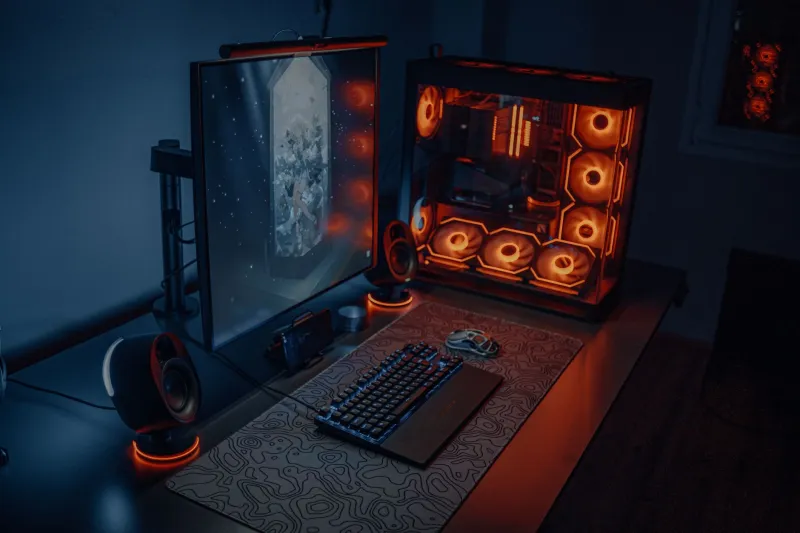
Lighting is where it gets divisive. RGB has been a punchline for years — the "more RGB = more FPS" joke has been run into the ground — but the community's relationship with it is more nuanced now. Strategic, minimal lighting (think a single bias light behind the monitor, or a subtle LED strip under the desk) reads as intentional. Chaotic, every-color-at-once lighting still gets roasted. The difference is restraint, and the community absolutely notices.
Chair choice is a whole separate conversation. Ever since the backlash against racing-style gaming chairs picked up momentum — fueled partly by pro players admitting they prefer office chairs for long sessions — showing up with a Herman Miller or a Steelcase has become its own kind of flex. Post a setup with a Secretlab and someone will definitely ask if your back hurts yet.
When Setups Go Viral — For the Wrong Reasons
Some of the most-discussed setup posts in recent memory didn't go viral because they were impressive. They went viral because they were chaotic in ways that felt almost artistic.
There's a recurring archetype the community has unofficially named the "contradiction build" — a setup where one element is clearly premium and everything surrounding it is budget or neglected. A $1,500 GPU sitting in a case that's literally duct-taped shut. A mechanical keyboard that costs more than the desk it's sitting on. A high-refresh-rate monitor propped up on textbooks. These setups generate enormous engagement because they tell a story. They raise questions. People want to understand the decision-making process, and the comments turn into genuine conversation.
On the opposite end, hyper-minimal setups — single monitor, clean desk, almost nothing on it — occasionally get accused of being "fake" or staged, especially when the lighting looks too perfect. The community has developed a nose for setups that were assembled specifically to be photographed, and they're not always impressed. Authenticity, weirdly, matters a lot here.
How Critique Culture Is Moving Product
Here's the part that brands are paying attention to: this peer-review ecosystem is genuinely influencing purchasing decisions at scale.
When a particular monitor arm or desk pad shows up in enough "highly rated" setups on r/battlestations, it starts trending in purchase threads. When a specific chair gets consistently roasted in critique posts, sales momentum stalls. This isn't speculation — affiliate marketers and peripheral brands have started tracking which products appear in viral setup posts the same way sneaker brands track which colorways show up on influencer feeds.
Micro-trends move fast in this environment. The "all-white setup" aesthetic dominated for a while, then got oversaturated and started getting clowned on. Dark, moody setups with minimal lighting had a moment. Recently, there's been a visible push toward "lived-in" setups — spaces that look functional and personal rather than staged, with a few deliberate accent pieces rather than a full aesthetic overhaul.
Smaller peripheral brands in particular have benefited from this culture. A desk mat from a boutique company, a keycap set from a small group buy, a monitor light that isn't the obvious Elgato choice — these items signal taste and research in a way that mainstream gear doesn't. The community rewards obscure good choices.
The Other Side of the Roast
It's easy to frame setup critique culture as purely brutal, but that's not the full picture. Plenty of posts — especially from newer or younger community members sharing their first real setup — get met with genuine encouragement and practical advice. The "starter setup" post, where someone shows a modest rig they're clearly proud of, often generates some of the warmest comment sections in the whole ecosystem.
There's also a mentorship layer that doesn't get talked about enough. Experienced community members will drop detailed, thoughtful feedback on cable routing, monitor positioning, or acoustic treatment that would genuinely cost money to get from a professional. The knowledge-sharing that happens inside these critique threads is real and valuable.
The community contains multitudes, basically. It will roast you for your chair and then spend twenty minutes helping you optimize your desk layout for free.
Your Setup Is Your Statement
What this whole culture ultimately reflects is something Gamer Style has been tracking for a while: the gaming space has become aesthetically self-aware in a way it simply wasn't ten years ago. The setup isn't just a collection of tools anymore. It's an expression of identity, taste, and investment — not just financial, but personal.
Posting your setup for community feedback is, in a weird way, the gaming world's version of the fit check. You're putting something personal out there and asking people to engage with it. Sometimes that engagement is harsh. Sometimes it's supportive. Either way, you're participating in a shared language around what good looks like — and that language is evolving faster than any single brand or trend can keep up with.
Post your setup. Take the notes. Fix the cables. The community is watching.