Stage Presence: Why Tournament Day Fits Are Now the Main Event
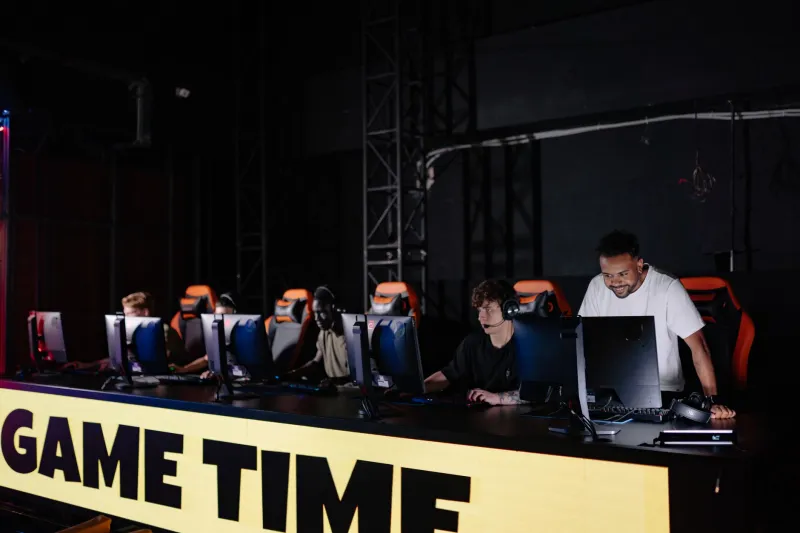
Walk through the player entrance tunnel at any major esports event these days and you'll notice something that has nothing to do with ping rates or practice hours. It's the fits. Layered streetwear. Custom sneakers. Tailored pieces that cost more than most gaming rigs. The moment pros step off the bus and into the venue, cameras are already rolling — and not just for highlight clips.
Somewhere between the LCS Spring Split and League of Legends Worlds, tournament arrival footage became its own content category. Fans aren't just watching to see who's playing well. They're watching to see who showed up.
From Team Jerseys to Personal Statements
For most of esports' early history, what players wore to events was an afterthought. You put on the jersey, you sat down, you played. Style was something that happened after the broadcast, if it happened at all. The culture has shifted dramatically.
Team managers across the scene are now factoring appearance into pre-tournament logistics in ways that would've seemed absurd a decade ago. Some organizations have brought in outside stylists — not just for branded content shoots, but for actual event days. The thinking goes like this: if a player is going to be photographed walking into the arena and clipped a hundred times on social media before a single game is played, that image matters.
"There's a real understanding now that the moment you get out of that car, you're already performing," one team operations manager told us, speaking on background because their org hadn't officially announced their style partnership. "We think about tournament arrivals the same way an NBA team might think about tunnel fits. It's content. It's brand. It's everything."
That NBA comparison isn't accidental. The tunnel walk has been one of pro basketball's most culturally potent moments for years, generating its own media cycle completely separate from game outcomes. Esports is running the same play, just a few years behind.
Worlds as a Runway
League of Legends Worlds is probably the clearest example of how far this has gone. The annual tournament already functions as one of the biggest events in global esports, drawing stadium crowds and international broadcast audiences. But the social media conversation around Worlds increasingly centers on style as much as strategy.
In recent years, players have shown up to Worlds venues in pieces from Supreme, Off-White, and Fear of God. Custom colorways. Limited drops timed specifically to coincide with match days. Some players have coordinated their off-stage looks across an entire team, creating visual cohesion that reads almost like a fashion editorial rather than a sports team.
Brands have noticed. Rather than treating esports sponsorships as a secondary placement — slap a logo on a jersey, call it a day — certain labels are now building actual launch strategies around tournament calendars. A limited sneaker drop timed to a Worlds group stage match day isn't an accident. It's a media buy dressed up as organic culture.
"Esports events have the audience, they have the visual real estate, and they have an extremely engaged fanbase that's already online and ready to talk," said one brand consultant who works with gaming organizations on apparel partnerships. "For a streetwear label trying to move product, that's a better environment than a lot of traditional fashion weeks."
The International and the Drip Economy
Over at Dota 2's The International, the fashion conversation has developed its own distinct flavor. The International's player pool is globally diverse in a way that creates genuinely different aesthetic inputs — Eastern European streetwear sensibilities mixing with Southeast Asian fashion culture and North American hype beast energy. The result is a tournament arrival scene that feels genuinely eclectic rather than just derivative of whatever's trending in US sports culture.
That diversity has started to influence how brands approach their esports partnerships. Instead of pushing one aesthetic uniformly across a roster, smarter organizations are giving players space to express their own style within loose brand guidelines. The outcome tends to generate more authentic content and, frankly, more interesting fits.
For players, there's also real financial logic at play. Pros who build a recognizable off-stage identity expand their personal brand beyond their in-game performance. A player whose fits consistently go viral has leverage that extends past their contract — into endorsements, collabs, and post-career opportunities that have nothing to do with their rank on the ladder.
The Stylist in the Server Room
The behind-the-scenes infrastructure supporting all of this is more developed than most fans realize. A small but growing ecosystem of stylists, brand consultants, and content strategists are now working specifically within esports. Some operate independently, building rosters of individual player clients. Others are embedded directly with organizations.
Their job isn't to make players look like fashion models. It's to make players look like themselves — just a more intentional, camera-ready version. That distinction matters, especially in a community that has historically been skeptical of anything that reads as performative or inauthentic.
"The worst thing you can do is dress a player in something they'd never actually wear," one stylist who works with multiple tier-one pros explained. "Fans can tell immediately. The fit has to make sense for who that person actually is. My job is just to help them get there more consistently."
Consistency is the key word. One great fit at one tournament is a moment. A player who shows up looking intentional at every major event becomes a style reference point — someone whose arrivals get anticipated the same way a sneaker drop gets anticipated.
What This Means for the Scene
The mainstreaming of tournament fashion creates genuine opportunity, but it also creates pressure. Not every player wants to think about their clothes as content. Some are there to compete, full stop, and the expectation that they also perform off-stage can feel like scope creep on what's already an extremely demanding career.
There's also a class dimension worth acknowledging. Not every player on every roster has the budget or the access to participate in hype fashion culture, and organizations vary wildly in how much support they provide. The visual gap between a well-funded tier-one roster and a team grinding on a shoestring budget is increasingly visible in tournament arrival footage.
Still, the direction of travel seems clear. Esports events are becoming fashion moments whether the scene fully embraces that or not. The cameras are there. The audiences are watching. The brands are building strategies around it.
The fit check meta is real, and it's not going anywhere. The only question now is who's going to play it best.